
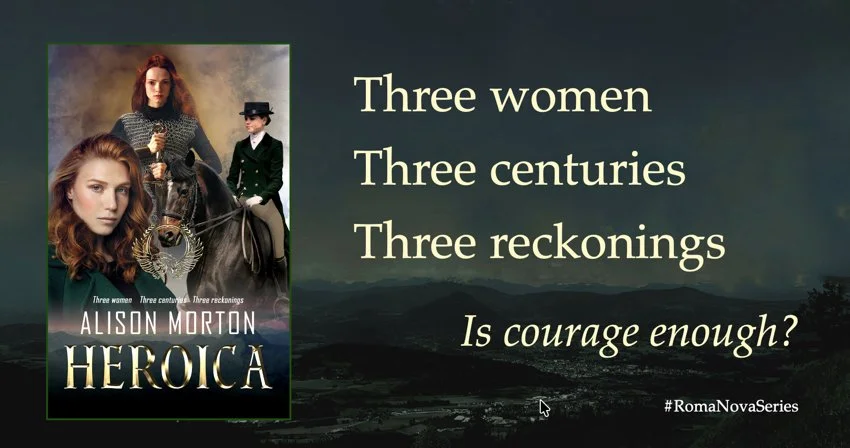
This week I’m welcoming Alison Morton once again to the Fictionfire blog. She’s previously talked about her Mélisende thriller series, but today we return to her long-running and successful Roma Nova series and ‘Heroica’, her new collection of stories set in that world. These are tales set centuries apart during the history of Roma Nova, but they are linked by strong threads – personal and public responsibility, freedom, consequences of one’s actions. The long line of female leaders of Roma Nova features such extraordinary women, sometimes rash, sometimes brave, always driven. Alison is here to talk about writing alternative fiction: the challenges and the rewards of envisaging a different course for history. I’m particularly fascinated by the overlap that needs to be considered, between what is original and ‘real’ and what the writer embroiders, alters and imagines.
The challenge of writing ‘alternatively’
Setting is a crucial part of any story. It can be in the past, present or future, a supermarket in the UK, a Viking ship on the high seas or a high mountain in the Andes.
But if you invent the country and set the story in an alternative timeline, then the task is doubled.
My Roma Nova series setting supposes that a part of the Roman Empire survived in a corner of Central Europe and now thrives in the 21st century. According to a recent trend on social media, many people (especially young men!) often think about the ancient empire with nostalgia. That 1229-year civilisation undoubtedly impacted on the development of Europe and I’m delighted to address this wish fulfilment, even if only fictitiously. However, I’ve slightly twisted the story – modern Roma Nova is egalitarian, plus tilted towards female leadership.
Now the challenge is set, how do you reply to it?
Landscape and climate should resemble the ones in the region where the imagined country lies. And no alternative history writer can neglect their made-up country’s social, economic and political development. This sounds dry, but every living person is a product of their local conditions. Their experience of living in a place and struggle to make sense of it is expressed through culture and behaviour.
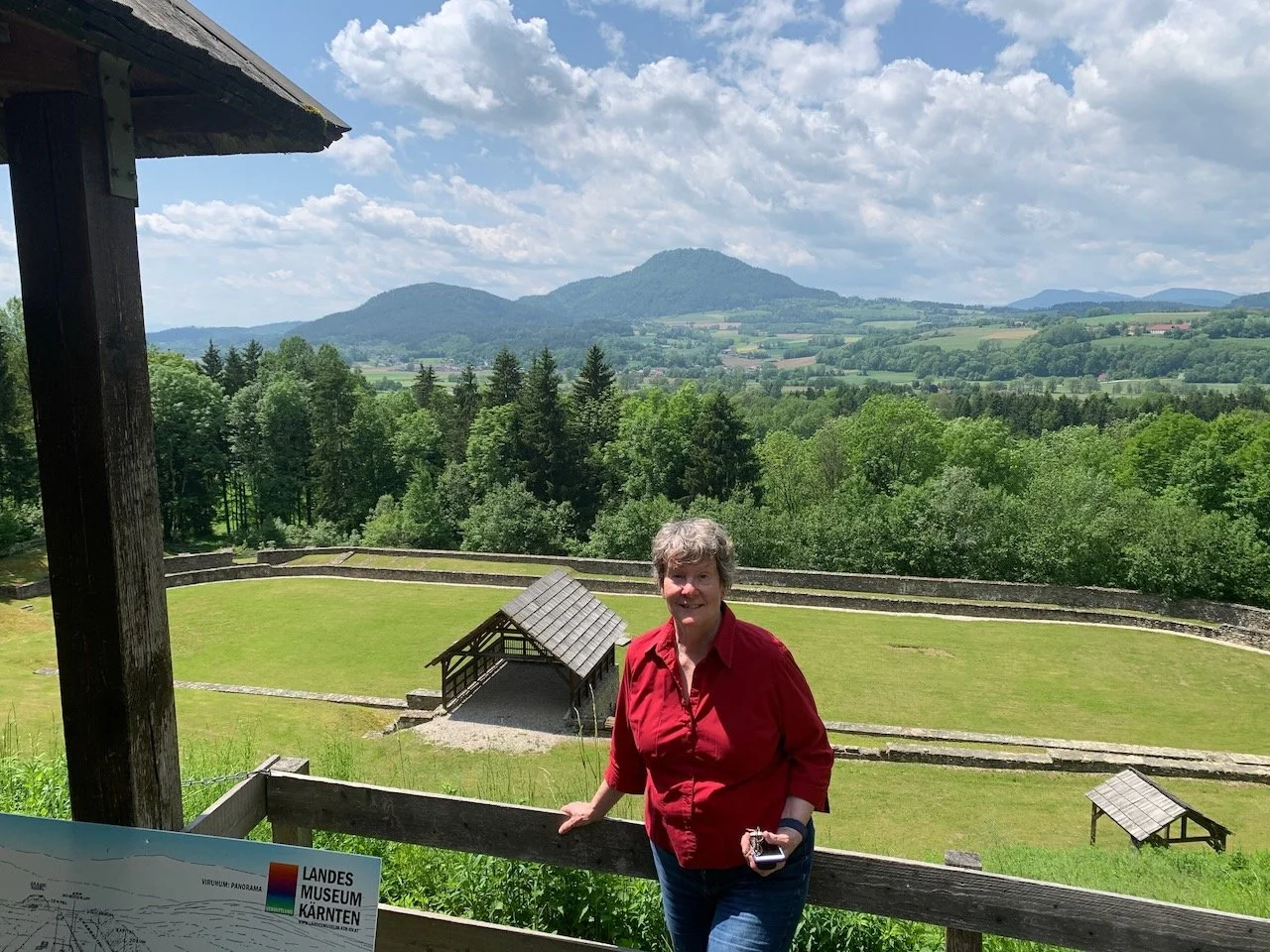
Alison at Virunum
Roma Nova’s continued existence has been favoured by three factors: the discovery and exploitation of high-grade silver in their mountains [geography with a dollop of luck!], their efficient technology [core Roman skill], and their robust response to any threat [core Roman attitude]. Remembering their Byzantine cousins’ defeat in the Fall of Constantinople [known historical fact], Roma Novan troops assisted the western nations at the Battle of Vienna in 1683 to halt the Ottoman advance into Europe [known historical turning point]. This was the inspiration behind Honoria’s Battle in my collection of stories, HEROICA.
The practical nitty-gritty of writing alternative history stories
1. Decide on your Point of Divergence [POD] from real timeline history
Alternative history must have a specific point in the past where it splits from the standard history that we and the readers know. Roma Nova’s was January AD 395 when worshipping the traditional Roman gods became punishable by death. Definitely a motivation for a change! Research this ad nauseam; know the political set-up, religion, customs, dress, food, agriculture, geography, economy, legal background, defence forces, cultural attitudes, everyday life of all classes and groups. This is the last reference to known facts. From there, you jump into the void.
2. Develop your imagined society with historic logic
If your story world doesn’t hang together, you will break the reader’s trust. You can build a fully-developed world but it should have reached that place via a credible route. Writers need to provide reasons for its existence, whether personal or political ones or just forced by circumstances from outside. Sometimes the reasons can be mixed, but one should be dominant.
In my modern Roma Nova world, women are prominent. This seems a long way from the ancient world where Roman attitudes to women were strongly patriarchal [starting point]. But towards the later Imperial period [moving time on] women gained much more freedom to act, trade and own property and to run businesses of all types [social and economic development]. Divorce was easy, and step and adopted families were commonplace [standard Roman social custom].
Apulius, the leader of Roma Nova’s founders in AD 395, had married Julia Bacausa, a tough Romano-Celt [non-Roman values introduced]. Their four daughters [next generation] were amongst the first pioneers [automatically new tough environment] so necessarily had to act more decisively [changing behaviour patterns] than they would have in a traditional urban Roman setting.
Given the unstable, dangerous times in Roma Nova’s first few hundred years [outside circumstances]and the limited number of men available, daughters as well as sons had to put on armour and carry weapons to defend their homeland and their way of life [societal motivation]. So I don’t think that it’s too far a stretch for women to have developed leadership roles in all parts of Roma Novan life over the next sixteen centuries. The two historical stories in HEROICA – Honoria’s Battle and The Idealist –reinforce the strong role of women in Roma Nova’s story in the (manufactured) past.
3. Keep some anchors to the readers’ pre-knowledge
Creating a story should be fun for the writer and the result rewarding for the reader. Although most writers like to encourage the reader to work a little and participate in the experience, writers shouldn’t bewilder readers. Anchors are important.
Take a character working in law enforcement. Readers can accept cops being gentle or tough, enthusiastic, intellectual or world-weary. Law enforcers come from all genders, classes, races and ages and stand in different places along the personal morality ruler. But whether corrupt or clean, they must act like a recognisable form of cop. They catch criminals, arrest and charge them and operate within a judicial system.
Legal practicalities may differ significantly from those we know, but they must be consistent with that society while remaining plausible for the reader. In the past, law enforcement was usually performed by town watchmen or the local military, stout staffs and swords to the fore. In the 21st century alternative timeline where Carina operates in Revolution?, a flashing light and an oscillating siren on a police vehicle and a blue uniform are universal symbols that instantly connect readers back to their own world.
4. Make the alternative present real for the inhabitants
Writers need to imbue their characters with a sense of living in their present. This is their normal existence. For them, it’s not a story in a book(!). Readers are intrigued by what happens to individual people living in a different environment as well as taking part in major historical events. Even in the most exciting and intriguing thriller, believable characters argue with their spouses, feel pressure at work, become stuck in a traffic jam as well as save the world. More often than not, it’s more interesting to follow the person’s story than the big event itself!
5. The light touch
Almost every fictional story hinges upon a set-up or a problem the writer has purposefully created. Readers will engage with it and follow as long as the writer keeps their trust. One way to do this is to infuse, but not flood, the story with corroborative details which verify and reinforce the original setting the writer has created but don’t tempt the reader to flick onto the next page, or bore them.
In my books set in the modern era, the Roma Novan characters say things like ‘I wouldn’t be in your sandals (not shoes) when he finds out.’ In the past, Statia and Honoria in HEROICA use horses as their main transport without thinking, while Carina in Revolution? drives a digitally locked car, but we don’t need to know the make, model or colour.
6. Go visible
Obviously, an imagined country is pretty hard to photograph. If you can draw, then you have the tools literally at your fingertips, but if like me your artistic skills are limited to sketches of pin-men or women, then we need the camera.
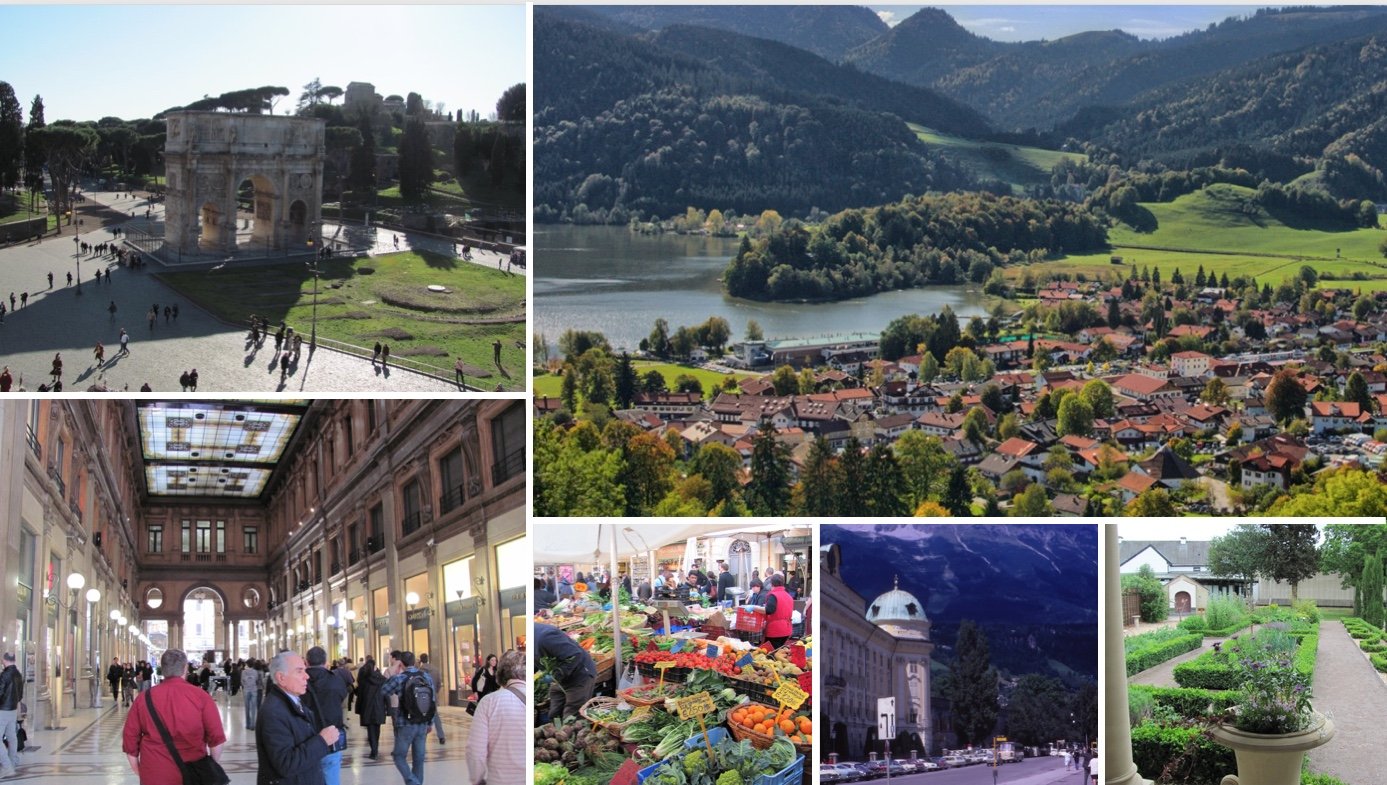
Images suggest tones, possibilities, and elements on which to base your ideas. Roma Nova is situated in a semi-mountainous area in the middle of Europe. I’ve visited much of former Roman Europe, so I have an idea of the type of countryside I need to imagine. If I’m finding it difficult to visualise my characters in a particular location, I look at the photos I’ve taken. Readers say they have loved them in my blogposts as well, so it’s a double benefit.
In summary, alternate history gives us a rich environment in which to stretch our imaginations beyond the norm and develop our storytelling. As with any genre, the writing must create a plausible world with fully rounded characters, but the writer is, of course, the mistress of their imagined universe.
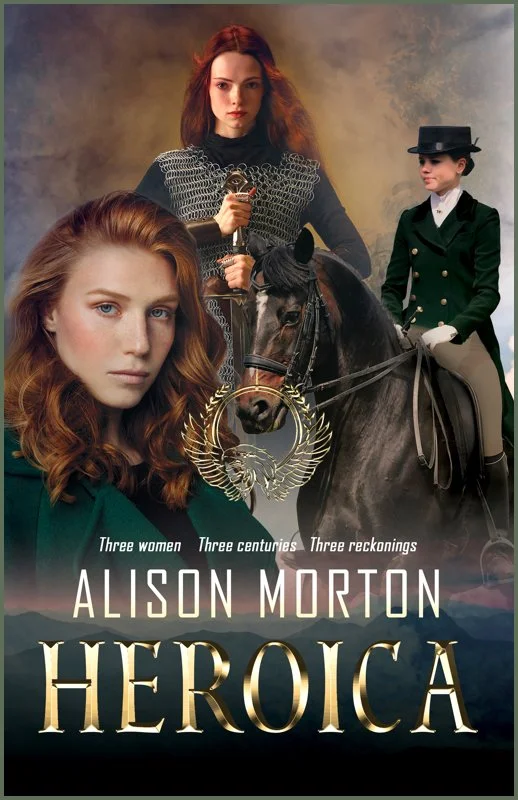
About ‘Heroica’
Even the strongest state is vulnerable to its past
2020, Roma Nova. Carina Mitela investigates a potential rebellion but discovers the long-buried secret that ignited the attempted uprising links directly to her own powerful family.
1683, Vienna. As Europe struggles against the Ottoman onslaught, Honoria Mitela leads her troops into the desperate battle to save besieged Vienna. The fate of Europe – and of Roma Nova itself – hangs in the balance.
1849, Central Italy. Statia Mitela’s impulsive act saves one life but jeopardises Roma Nova’s very existence and threatens her descendants with public disgrace, financial ruin and permanent exile.
Three stories of the women of the Mitela family, descendants of the founders of Roma Nova, bound by blood and courage.
Buy HEROICA:
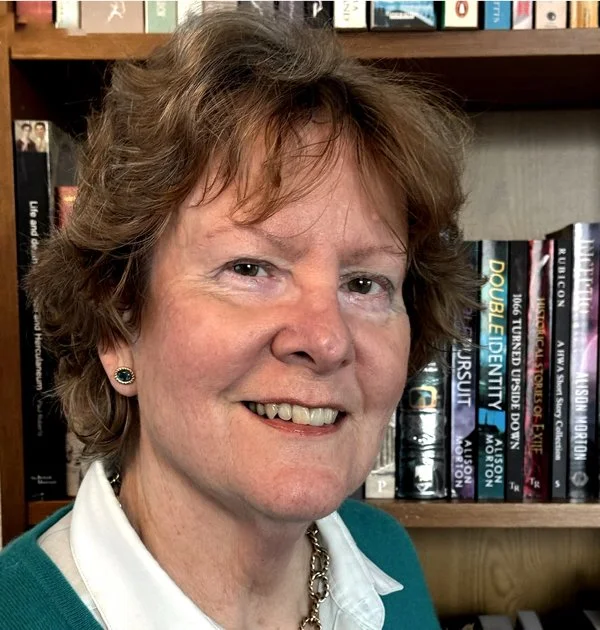
About Alison Morton:
Alison Morton writes award-winning thrillers featuring tough but compassionate heroines. Her twelve-book Roma Nova series is set in an imaginary European country where a remnant of the Roman Empire has survived into the 21st century and is ruled by women who face conspiracy, revolution and heartache but use a sharp line in dialogue.
She blends her fascination for Ancient Rome with six years’ military service and a life of reading crime, historical and thriller fiction. On the way, she collected a BA in modern languages and an MA in history.
Alison lives in Poitou in France, the home of Mélisende, the heroine of her three contemporary thrillers, Double Identity, Double Pursuit and Double Stakes.
For the latest news, subscribe to her newsletter at https://www.alison-morton.com/newsletter/ and receive 'Welcome to Alison Morton’s Thriller Worlds’ as a thank you gift.
Connect with Alison:
Alison’s World of Thrillers site
Goodreads
Alison’s Amazon page
Newsletter sign-up: https://www.alison-morton.com/newsletter/
