A Quiet Revolution in a City Reborn: Jane Davis on setting 'The Temple of the Muses' in Georgian London

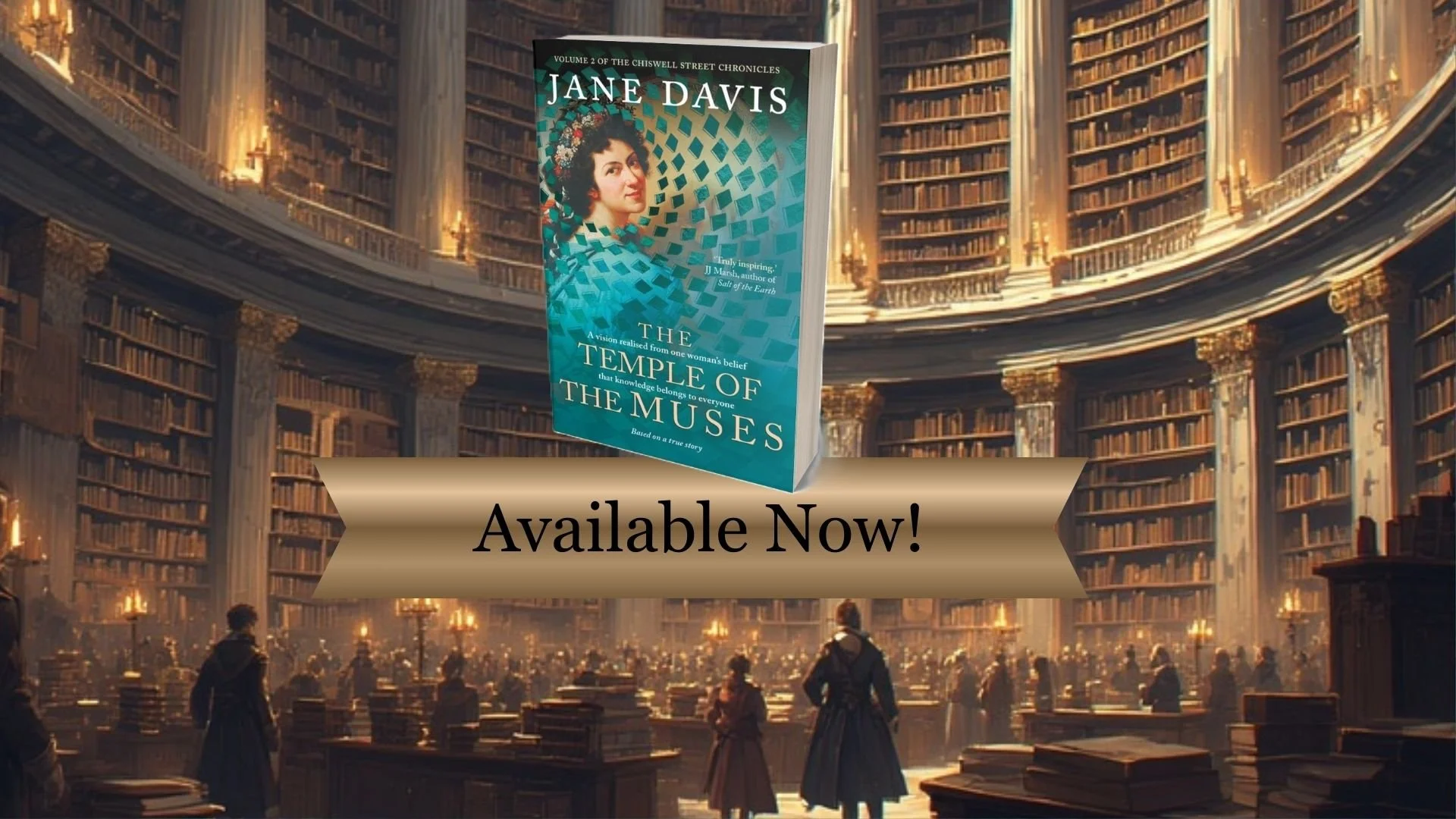
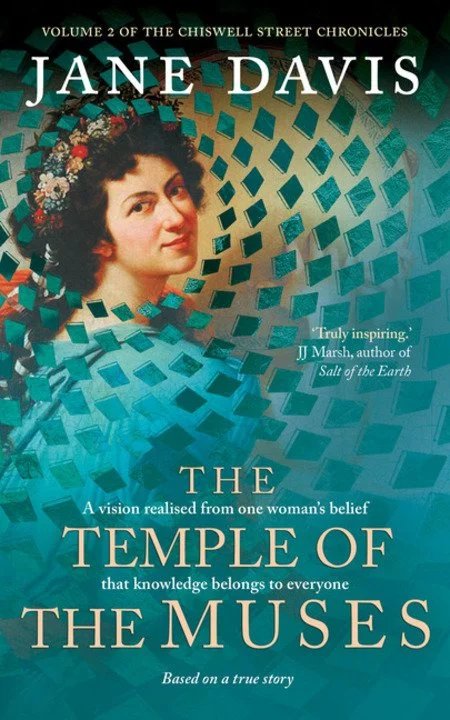
I’m delighted to welcome my friend Jane Davis to the Fictionfire blog again. I’ve long been a fan of her compelling, original and incredibly well-researched novels. She has recently published The Temple of the Muses, the sequel to The Bookseller’s Wife. It follows the further experiences of Dorcas Lackington, who really existed, and who was married to bookseller James Lackington. In late eighteenth century England issues of class, wealth, poverty, education and the role of women all feature in this moving and fascinating story. At the heart of it is Dorcas and her determination to bring books to a wider readership - a desire taken to extraordinary levels by her less-than-modest husband, who sets about building the biggest bookshop ever seen in London … With so much at risk, will his high-flown plans work?

Jane knows that the best of historical fiction draws you into a past era. Here she describes the London the Lackingtons would have known - a London we know and yet don’t know.

The Birth of a Modern Metropolis

How the 1700s reshaped London — and inspired the backdrop to my novel

Walking through London in the 1780s was to encounter a city both ancient and astonishingly new, shaped over the centuries by disaster, reform, and resilience.

For readers of historical fiction, this period offers a metropolis in transition — a place where sections of the Roman wall are still evident, medieval alleyways run between grand new streets, where the legacy of the Great Fire still influences urban planning. A city that is on the threshold of modernity — ambitious, restless, dangerous, and alive with possibility. It is this richly layered London that forms the backdrop to The Temple of the Muses.

To understand Dorcas’s world, it helps to step back a few decades and explore how the city evolved.

The Medieval City Endures

Streets, wards, and daily life within the old City walls

A map of the City from 1720 shows the dark outline of the old city wall enclosing a tightly packed urban core. Major streets such as Cheapside, Ludgate Hill, and Fleet Street are clearly recognisable today, yet around them once spread a dense maze of small lanes and alleys — many now vanished or reshaped.

The City of London was, as it remains, a distinct jurisdiction separate from Westminster and Southwark. While the population of greater London doubled during the eighteenth century to one million people, the City was already overcrowded and remained at roughly 200,000 people. It was divided into twenty-five wards, each with its own distinct character and communities.

Around St Paul’s Cathedral lay bustling commercial areas such as Paternoster Row and Ludgate, alongside institutions like Christ’s Hospital School near Newgate. To the north, Aldersgate Ward encompassed St Bartholomew’s Hospital, Smithfield Livestock Market, and an intricate warren of narrow streets that today’s London cannot rival for complexity.

This crowded, vibrant environment provides the texture of the novel’s setting — a city alive with trade, noise, and human drama.

Reimagining London After the Great Fire

Christopher Wren’s unrealised vision and his lasting influence

The Great Fire of 1666 destroyed seven-eighths of the City of London, offering a rare opportunity to rebuild from scratch. London’s appearance might have been very different had Sir Christopher Wren’s ambitious blueprints been adopted. Inspired by the grand avenues of Paris and Rome, Wren envisioned wide boulevards radiating from elegant piazzas and a magnificent riverside quay replacing the ramshackle wooden wharves along the Thames. His plan even featured a symbolic river god, Tamesis, watching over a burning London. But practicality — and property rights — trumped his architectural ambition, and much of the medieval street plan survived.

St Paul’s Cathedral and the New Urban Landmark

Faith, architecture, and identity in Georgian London

But Wren left his mark on London, designing many of its churches and his masterpiece St Paul’s Cathedral. Completed in 1708, on his birthday, it was more than a London landmark and a place of worship. It served as a powerful reminder of London’s capacity for resilience, recovery and reinvention.

“For every Cheapside wax chandler, silver-and goldsmith, milliner and mantua-maker, there are apprentices and shop-assistants, all of whom need breakfast. Dorcas shoulders her way through the throng. An old man with a patch over one eye and the other rheumy thrusts out a gnarled hand. “Spare some change, mum.” She mutters an apology. In the road, a man hauls a handcart piled with pyramids of onions and turnips, oblivious to the horses and carts, or perhaps not oblivious but stubbornly determined, or not even that, but simply resigned. She too is resigned, her guilty feet guiding her through the city’s arteries towards redemption and ruin. Here is St Paul’s, every traveller’s reference point. It is said that in his enterprise to rebuild the city’s churches, Wren positioned each steeple so that when London is viewed from the surrounding hills, the eye is drawn to its great dome. Even with its Portland stone dulled by city smoke, the cathedral appears as a dream conjured in the mind of a benevolent god.”

Order from Congestion

Roads, bridges, and the opening of the metropolis

The mid-to-late 1700s brought a wave of reforms that reshaped daily life. The Bow Street Runners, established in 1749, marked the beginnings of professional policing. Westminster Bridge opened in 1750, easing the flow of traffic across the Thames. The New Road (today’s Marylebone Road and Euston Road) created London’s first bypass, allowing livestock to be driven to Smithfield Market without clogging the city streets.

Old city gates that had once enclosed London were demolished in 1761, along with the crowded housing that perched precariously on London Bridge — a notorious fire hazard. New paving and lighting acts in the 1760s introduced numbered houses, cleaner streets, drainage, and oil lamps that illuminated the city at night. These reforms improved safety, trade, and social order, though inequality remained stark.

Building the Georgian City

Perhaps most transformative was the Building Act of 1777. By enforcing standards for new housing and dividing properties into regulated “rates,” it curbed the worst excesses of shoddy construction, built only to survive the term of a lease. The result was the orderly Georgian terraces and elegant squares that still define much of London today — uniform, but a symbol of a city’s modernisation.

Alongside improvements in streets and housing, the eighteenth century also witnessed the emergence of what might be called civic London — a city increasingly shaped by institutions dedicated to culture, learning, and public life. Museums, galleries, theatres, hospitals, and concert halls multiplied as wealth from trade and empire flowed into the capital. The British Museum, founded in 1753 and opened to the public in 1759, offered unprecedented access to collections of art, antiquities, and scientific specimens, while purpose-built theatres such as Drury Lane and Covent Garden became central to London’s vibrant social scene. Pleasure gardens like Vauxhall and Ranelagh blended music, art, and spectacle, attracting visitors from across the social spectrum. These spaces reflected a growing belief in improvement, education, and shared urban culture, transforming London from a commercial hub into a centre of intellectual and artistic life.

A Tale of Two Londons

But there is another side of London, one that is hidden from tourists and revellers. It is a story of poverty, overcrowding, crumbling tenements, debtor’s prisons, and labyrinths of alleys where disease and crime flourish. The conditions that shaped Charles Dickens’ grim urban landscapes had their roots in the eighteenth century: stark inequality, child labour, unstable housing, and fragile public order.

“More people live on the streets than ever before in Dorcas’s memory, entire families huddled in doorways. What look like piles of limp rags lie prone on the footway, and who’s to know whether you’d be thanked for shaking them to check if they are alive or dead when only hunger awaits.”

This contrast between refinement and hardship — between the city celebrated by reformers and the city endured by the poor — gives late eighteenth-century London its powerful tension and provides a compelling backdrop for any novelist.

London in the Aftermath of the Gordon Riots

Violence, fear, and the reshaping of urban consciousness

In June 1780, tensions erupted in one of the most dramatic events of this era - the Gordon Riots. What began as a protest against the Catholic Relief Act quickly spiralled into days of chaos. Mobs attacked prisons, chapels, homes of prominent Catholics, and symbols of authority. Newgate Prison was stormed and burned, releasing hundreds of prisoners into the streets. Fires lit up the skyline, eerily recalling memories of the Great Fire more than a century earlier.

The riots exposed deep social tensions — not just religious prejudice, but economic hardship, and resentment toward the government — all simmering beneath the surface of Georgian London.

The riots left psychological scars on the city, reminding Londoners how fragile order was and how quickly it could collapse. In their aftermath, authorities recognised the urgent need for stronger law enforcement and better urban control. But reformers saw the need for change. A fairer society and a redistribution of wealth.

Dorcas Lackington and her husband James would be part of that change, taking the radical step of making books affordable, certain in their conviction that reading and book-learning would provide the surest means of self-improvement and a path out of poverty. They dared to dream of a temple to literature – the biggest bookshop in Europe. And all the while, the tension between stability and upheaval mirrors the emotional journeys at the heart of their story.

I invite you to step into eighteenth-century London and experience this extraordinary city – and its people – at a time of profound change.

Book link: books2read.com/thetempleofthemuses


Book Description

Volume 2 of the Chiswell Street Chronicles

The story continues...

 London, 1780. As the city smoulders in the aftermath of the Gordon Riots, booksellers James and Dorcas Lackington refuse to answer despair with charity. Instead, they place their faith in something far more radical: books.

 Convinced that reading offers the surest escape from poverty, the Lackingtons launch a daring experiment—pricing books so cheaply that even apprentices and servant girls can afford them. It is a bold challenge to the rigid social order of Georgian England, and one that places them squarely in danger.

 Dorcas knows that life alongside James and his unshakable optimism will never be smooth. But she is no mere helpmeet. She is his compass, his conscience, and often the sharper mind. In a modest corner of Moorfields, their bookshop ignites a quiet revolution as ordinary people encounter philosophy, liberty, reason, and love for the first time.

 Not everyone welcomes this awakening. The Junto, a powerful circle of men who believe that books breed dangerous ideas in the minds of the poor, move swiftly to crush the Lackingtons’ venture. As threats and intimidation escalate, Dorcas realises that survival will not come from retreat—but from becoming too large to silence.

 Her answer is audacious: to build a cathedral to literature, not for kings or scholars, but for every woman and man who has ever been told that knowledge is not theirs to claim—The Temple of the Muses.


✨ Perfect for readers of Maggie O’Farrell, Tracy Chevalier, Hilary Mantel, Sarah Waters, and Philippa Gregory, and for anyone who loves women’s historical fiction, book club fiction, and stories about books and the lives they change.


‘One woman’s quiet revolution in a time of flux and ferment.’ ~ Lorna Fergusson, author of The Chase

 ‘I laughed with them, and cried with them, but most importantly, I loved this story’ ~Bronwyn Kotze

 ‘A historical novel with a timely, modern message.’ ~ Diane Reid Stevens


About the Author

Jane Davis is the author of character-driven historical and contemporary fiction that bridges meticulous research with compelling emotionally-rich storytelling. Her novels explore subjects ranging from the life of a pioneering female photographer to families searching for justice after a devastating disaster. Interested in what happens when ordinary people are pushed into extraordinary situations, Jane introduces her characters when they’re under pressure and then, by her own cheerful admission, throws them to the lions. Expect tangled relationships, moral crossroads and a smattering of dark family secrets!

Her first novel, 'Half-Truths and White Lies', won a national award established by Transworld in their quest to find the next Joanne Harris. Since then, her books have continued to earn acclaim. She was hailed by The Bookseller as ‘One to Watch’. 'An Unknown Woman' won Writing Magazine’s Self-Published Book of the Year in 2016 and was shortlisted for the IAN Awards. 'Smash all the Windows' won the first ever Selfies Book Award in 2019. 'At the Stroke of Nine O’Clock' went on to be featured by The Lady Magazine as one of their favourite books set in the 1950s and was a Historical Novel Society Editor’s Choice.

Jane lives in a Surrey cottage that was originally the ticket office for a Victorian pleasure garden, known locally as ‘the gingerbread house’. Her home frequently finds its way into her stories – in fact, it met a fiery end in the opening chapter of 'An Unknown Woman'.

When she isn’t writing, you may spot Jane disappearing up the side of a mountain with a camera in hand, or haunting Victorian cemeteries searching for the perfect name for her next character.

You can find her at:

Website

Facebook page

Twitter

Pinterest:

Get a FREE copy of her time-slip, photography-themed eBook, I Stopped Time, when you sign up to her newsletter 


My Year of Reading 2025

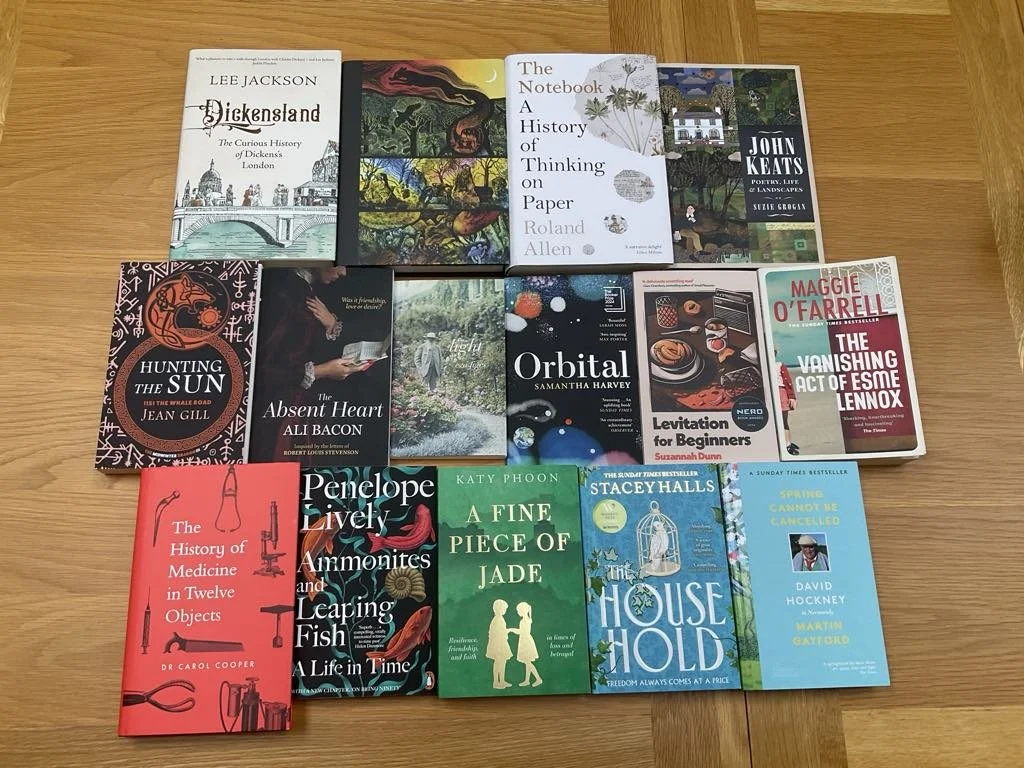
Photo of Lorna Fergusson's favourite books of 2025

A selection of my favourite reads in 2025 - many others were on Kindle

It’s February, so this post is pretty late, I know, but as I started the year with my third encounter with Covid, I think you may forgive me. I’m back with my annual round-up of reading: over 60 books again and many of them non-fiction. Some were re-reads because I am so fond of them. Some were by friends or editorial clients (who often become friends too!)

Here are the highlights of my 2025 year of reading, in alphabetical order by surname.

 Non-fiction:

Roland Allen: The Notebook: A History of Thinking on Paper. I loved, loved, loved this book and found every page fascinating. A gorgeous hardback made for a stationery addict like me!

Carol Cooper: The History of Medicine in Twelve Objects. Wittily told and full of fascinating – and often shocking details that make you glad not to have been an invalid in past centuries.

Ann Merle Feldman: Fierce over Fifty. An urgent, passionate exploration of how women can drive themselves to physical burnout and what to do about it.

Anna Funder: Wifedom: Mrs Orwell’s Invisible Life. Doesn’t make you feel keen on George Orwell …

Martin Gayford: Spring Cannot be Cancelled: David Hockney in Normandy. A joyous, inspirational celebration of art and of simply being alive.

Suzie Grogan: John Keats – Poetry, Life and Landscape. What sets this book on Keats apart is the author’s passion for the man himself and the places that inspired him. Follow in his footsteps via these compelling essays on locations Keats visited or stayed in. I’ve read this book more than once and enjoy it even more each time.

Lee Jackson: Dickensland. A sprightly survey of places that mattered to Charles Dickens, painting a portrait of an era we all think we know because we’ve watched Great Expectations and A Christmas Carol. Nuggets of information like sixpences stirred into a plum pudding.

Penelope Lively: Ammonites and Leaping Fish, a Life in Time. I think this is a wonderful book, wise, waspish, evocative. Like the David Hockney book mentioned above, it factors in ageing and how to cope with or rise above it and keep finding life full of meaning.

Sarah Ogilvie: The Dictionary People. Loads and loads of fascination here, if you are a bibliophile and a wordaholic, as I am.

 Fiction

Ali Bacon: The Absent Heart. We’ve all heard of Robert Louis Stevenson and we may have heard of his American wife Fanny – but we may not have heard of a different relationship, one which unfurled over many years, based on longing and admiration, but ultimately much more complicated than that. I loved the delicacy of the writing here and the close psychological exploration of love in various forms and how a woman might make her mark in a male-dominated 19th century literary scene.

Sean Cunningham: Storm’s Edge. This marks the start of a new urban fantasy series from a writer who writes brilliant dialogue, high octane action scenes and has one of the most fertile imaginations I’ve come across.

Suzannah Dunn: Levitation for Beginners. A novel with a teenage narrator – one who lives in the early 1970s. It captures the era really well (speaking as one who lived in it …)

Eva Figes: Light. Set at Monet’s house in Giverny, this beautiful little book imagines the people in his orbit and the tyranny of art over the artist and all who deal with him. This was a real discovery, this book: it is gorgeously written and catches the subtleties of the changes of light in the course of a fleeting day just as Monet himself always sought to do.

Clare Flynn: The Star of Ceylon. Clare’s books are always a mix of romance, location and a passionate message. Here, it’s the question of women’s education in the early 20th century. Start rooting for yet another of her rebel heroines (and read her guest-blog for Fictionfire here [link])

Jean Gill: Hunting the Sun – third in her wonderful 12th century Viking series, where the action turns to Sicily. Gripping – and moving. The fourth in the series will be published this year!

Samantha Harvey: Orbital. Like the Eva Figes book mentioned above, this one is deceptively short, but don’t think for one moment that means short equates with insubstantial. This is full of poetic prose and philosophical thought and it’s the kind of book you know you will have to come back to and dwell in. This is not a read once and throw away kind of book.

Stacey Hall: The Household. A historical read based on Urania Cottage, the home set up for fallen women by Charles Dickens and Angela Burdett Coutts. I loved how she spun the social facts into such a compelling novel.

Anna Mazzola: The Book of Secrets. Another historical read based on real events, this one set in 17h century Rome. A mixture of crime and magic.

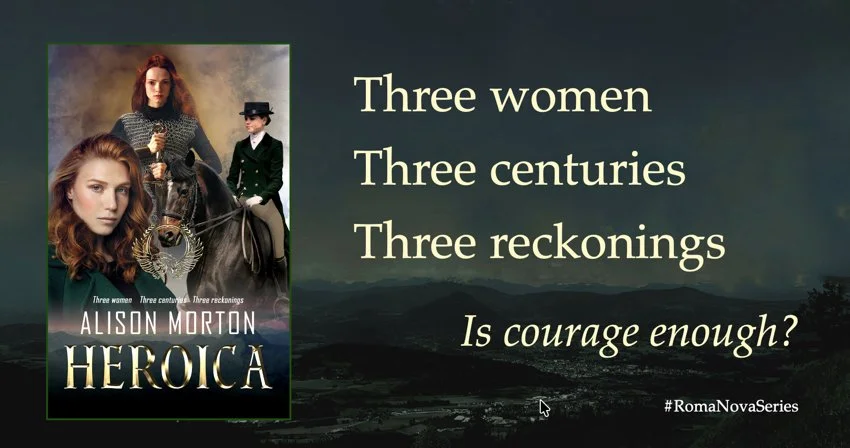
Alison Morton: Double Identity and Double Pursuit. Crime again, but this time in modern Europe. Fast, pacey, full of tech knowledge – Alison Morton’s new series is fun to read and I’m looking forward to the third one, which she published in 2025 but which I haven’t got to yet!

Maggie O’Farrell: The Vanishing Act of Esme Lennox. A complex, fairly slow start but oh my, utterly gripping by the end! It ranges through time, using different narrative voices. The delicacy of progressive revelation is expertly handled, as you would expect from so fine a writer.

Katy Phoon: A Fine Piece of Jade. The upheavals of 20th century life in China are beautifully – and often heartbreakingly – evoked in this novel, based on the life of the author’s mother. The Second World War and the Cultural Revolution form the backdrop to a tale of enduring friendship.

Colm Toibin: Brooklyn (reread). He is so good on the ambivalence felt by those who leave home. The excitement of new experience, the tug at the heartstrings when remembering the past …

Debbie Young: Death at the Village Chess Club. Cosy, playful, fun. I’ve said before how Debbie has such a great eye for village life , which provides endless inspiration for her various series.

 Other:

Fate – Tales of History, Mystery and Magic. An impressive anthology of stories which showcases how well each contributor knows the era they are describing. Adventure, myth, battles, romance, power and delusion – they’re all there!

Richard Flanagan: Question 7. Is it a novel? Is it a memoir? Is it a meditation? Whatever it is, it is brilliant.

Kathleen Jamie: The Bonniest Companie. Another reread, this one, a collection of poems about Scotland at the time of the independence vote, against the background of the natural cycle of the year.

Jackie Morris and Tamsin Abbott: Wild Folk. You may have guessed by now I love a beautiful book and this one is truly stunning. And it’s not like any other book you’ll have come across. It mixes calligraphy, poetry and the retelling of fairy tales and legends with extraordinary stained glass images made by Tamsin Abbott. I have long been a fan of Jackie Morris but her partnership with Tamsin has added a whole new dimension. This book was caught up in the collapse of Unbound publishing so I am delighted that it will be published again in March by Chelsea Green Publishing. See Jackie’s post here. I can’t recommend it too highly. Please consider buying it from Solva Mill when it is republished: they were really helpful when I wanted to buy it for a dear friend after the Unbound collapse – what’s more, I had it signed, with a special message for her, by Jackie and Tamsin!


You’ll see from this list that I am not one of those readers who don’t understand why people read a book more than once. My reading years always involve revisits and rediscoveries and they are every bit as important as the first fine rapture of discovery. Do you feel the same?

I hope this list piques your interest. And don’t forget that 2025 started with my own publication: the paperback version of One Morning in Provence

Women in Academia in the Edwardian Era: the Real-life "Stellas" - author Clare Flynn guest-posts

I’m delighted to welcome Clare Flynn to the Fictionfire blog. Clare has just published her eighteenth book, The Star of Ceylon. In her novels, she often focuses on the experiences of travellers to exotic locations seen as glamorous or offering adventure, particularly if those travellers are women, and women of a certain era. The Star of Ceylon is no exception: on reading it, I found myself drawn into history and rooting for the lead character, Stella Polegate, as she struggles to find a role for herself in a restrictive and often misogynistic society. Stella is spirited, bright and sensitive yet all too often criticised and repressed. That is, until she meets someone who may have the capacity to see her as she really is…

I asked Clare to talk about women’s education and its role in this compelling and moving story, set in the early 20th century. Readers are already avid for a sequel! Over to Clare:

When I wrote The Star of Ceylon and created the character of Stella Polegate, I was inspired by the story of Philippa Fawcett, the mathematician at Newnham College, Cambridge, who scored 13% higher than the top male student in the Mathematical Tripos but not only wasn’t awarded the prestigious Senior Wrangler title (which went to the lower scoring man) didn’t even receive a degree for her pains. Cambridge didn’t award degrees to women until 1948, just weeks after Philippa died.

But Philippa Fawcett was by no means alone.

The Edwardian period saw a fascinating paradox – women were gaining unprecedented access to university education yet remained largely barred from academic careers and recognition. Neither Oxford nor Cambridge awarded degrees to women even though they reluctantly allowed them to attend and follow the same courses as men. Stella Polegate would have been part of a generation caught between possibility and frustration. It’s painful imagining how dreadful it must have been to be pushed to the sidelines while watching men of inferior intellect wearing the laurels.

Herta Ayrton - Bain News Service (publisher), Public Domain, via Wikimedia Commons

Another female participant in the Cambridge Maths Tripos was Hertha Ayrton (1854-1923). Hertha was at Girton, her application sponsored by George Eliot no less. Hertha passed the Tripos and subsequently gained her degree from the more female-friendly University of London – but her forte proved to be physics. She went on to reinvent the arc light – her paper on The Hissing of the Electric Arc gained her membership of the Institute of Electrical Engineers in 1899. She was not permitted to read her own paper to the Royal Society – it was read by a man. Presumably the idea of a woman standing on the dais would have given those fragile male scientists a fit of the vapours. A later proposal to make her a Fellow of the Royal Society in 1902 was denied as she was a married woman. Men were indefatigable in their efforts to keep clever women in their place. Finally in 1904, the Royal Society let her read her own paper, The Origin and Growth of Ripple Marks. Hertha went on to become the first woman (and one of only two ever!) to win the Royal Society’s Hughes Medal – in 1906. So did she at last get that fellowship? What do you think? Of course she didn’t.

As is so often the case, acknowledgement came posthumously. Hertha has her blue plaque; she has been named as one of the ten most influential British women in the history of science; numerous prizes and fellowships have been created in her name – a name which also graces a STEM centre at Sheffield Hallam University, a Portsmouth street, a billion-pound climate change aid fund, and a berth at Portsmouth docks!

Beatrice and Sidney Webb - LSE Library, no restrictions, via Wikimedia Commons

Next up is Beatrice Webb (1858-1943). Though never formally educated, I’m including her as, though she didn’t attend a university, she founded one! Webb, entirely self-educated, became a formidable social and political researcher. She was also an ardent feminist.

Webb had a failed, stormy, four-year relationship with the twice-widowed cabinet minister, Joseph Chamberlain, twenty-two years her senior. The couple broke up because of his refusal to acknowledge her need for independence. He bluntly told her that he would tolerate no division of opinion in his household. It was for Beatrice a battle within herself of passion and sensuality versus her intellectual ambition. If she were to pursue the latter, she must forgo the former. (Funny how men never needed to make this choice!)

Instead, she married the rather unattractive but adoring Sidney Webb. The pair were active members of the Fabian Society, founding the New Statesman and pioneering social causes and policy. Her 1891 book The Cooperative Movement in Great Britain helped shape the cooperative movement. She was responsible for the concept of collective bargaining and an advocate for equal pay. Webb was a co-founder of the London School of Economics. Her pioneering social research work led to many aspects of the creation of the postwar welfare state. Unfortunately, Beatrice and Sidney had an uncritical, rose-coloured view of Stalin, communism and the Soviet Union, and this led to much subsequent condemnation of their weighty tome Soviet Communism: A New Civilization.

At the request of their friend, George Bernard Shaw, Beatrice and Sidney Webb were honoured with a burial in Westminster Abbey. Again – the rewards pile on when you’re dead.

Another victim of the dreaded Maths Tripos is Grace Chisholm Young (1868-1944) who completed it when at Girton – and incidentally for a bet also took the papers for the Oxford maths degree and scored First Class degree results from both! Alas none awarded. She then earned her doctorate in mathematics from the more accepting University of Göttingen in Germany – after jumping through hoops to be admitted. Armed with her PhD, she couldn't get an academic position anywhere in England and had to settle for publishing papers jointly with her husband, though much of the work was hers alone – an arrangement that echoes my character Stella Polegate's uncredited contributions to her father’s work.

In Stella’s field of anthropology was Beatrice Blackwood (1889-1975), a publisher’s daughter. She studied English Literature and Language at Somerville, Oxford (no degree awarded) and returned to do a Diploma in Anthropology four years later (Distinction). She then took a post as a research assistant in the department of Human Anatomy. When, in 1920, Oxford allowed women to matriculate (shame on you, Cambridge!) she sat both her BA and MA on the same day, adding a BSc in Embryology a few years later.

Blackwood was an ethnographical expert on Papua New Guinea, which she visited extensively, thanks to grants from Yale and Oxford. She became a lecturer in Ethnography at Oxford and the curator of the wonderful Pitt-Rivers Museum, sourcing many of its exhibits herself. Perhaps, had she not accompanied her father to Ceylon, Stella’s life and career might have followed a path similar to Blackwood’s.

The Pitt-Rivers Museum, Geni, CC BY-SA 4.0. Creative Commons licence, via Wikimedia Commons

All these women navigated similar challenges to Stella. Each of them faced a battle for intellectual credibility, the pressure to make a choice between career and marriage, and the painful reality of watching less qualified men advance, using their ideas. Their letters and diaries from this period offer poignant insights into the emotional toll of being, as Virginia Woolf later wrote, "locked out" of the libraries and laboratories of learning.


If you’d like to find out more about Philippa Fawcett, see Clare’s post on Anna Belfrage’s blog.

Find The Star of Ceylon here.

Discover more about Clare and her novels at her website.

Books of 2024

Like so many people, when I come to the end of the year I review all sorts of aspects of it: work, family, health, the state of the world — trying not to linger long on the last of these … Of course, as a writer and reader, books are core to my world, whether I’m helping my editorial clients or guiding new writers, or producing my own work. I’ve ended 2024 on a flourish, publishing my first new book in some years – and I will have more to say about that process in future posts. For now, though, this post is about highlighting some of the books I’ve read and liked in 2024. (They are not all in the photo above as quite a few were read on Kindle.)

I read over 60 books and as in previous years non-fiction books made up a high proportion. Quite a few I am not going to mention at all as they were research books for the novel I’m working on and I don’t want to pre-empt that. Nor am I going to pick a ‘book of the year’ because so many were impressive and for different reasons so it is like picking your favourite child! I’ll list them under categories and you can take it as read (!) that they’re all worth spending time with.

Non-fiction and Memoir 

Judi Dench: Shakespeare, the Man Who Pays the Rent, in which she shares her passion for the magic of Shakespeare’s writing and combines that with her memories of a long stage career.

Rory Stewart: Politics on the Edge. Read this and you will want to laugh and cry. You’ll learn how it is a miracle that anything at all gets done in a failed political system like ours. 

Franny Moyle: The King’s Painter. Any lovers of Wolf Hall will enjoy this, a biography of Hans Holbein, painter of Cromwell at the height of his career and of Ann of Cleves, the trigger of Cromwell’s downfall. 

Alan Garner: Powsels and Thrums. I attended an event at Blackwell’s bookshop in Oxford where actor Robert Powell gave wonderful readings from this extraordinary book, a collection of thoughts, memories and opinions by a unique writer, now 90 years old. If you’re interested in language, deep history and the nature of creativity, this is for you. But it is the brief account of the man he went running with that will stop you in your tracks and bring tears to your eyes. 

Fiction 

I’m listing these alphabetically and they are all jolly good reads in various genres. Language and story and character and setting: these are the watchwords for any good book. I leave you to explore! 

Margaret Atwood: Stone Mattress. Read this for the first three stories if nothing else. They are blindingly good, with biting satire of the literary world, ambition, envy, rivalry, dreams and losses.

Jane Davis: The Bookseller’s Wife. I love Jane’s writing for the richness of detail and this one, set in the 18th century, is no exception. High quality research lies behind every book she writes and I can wait to read the sequel.

Clare Flynn: The Artist’s Wife and The Artist’s War, the last two novels in the Hearts of Glass trilogy; both of these novels feature social change and the First World War – often to heartbreaking effect. 

Jean Gill: Among Sea Wolves, the second of her 12th century Viking stories which blend adventure with heart and otherworldliness. She’s another writer who takes extraordinary care with her research but never lets it weigh her prose down. The narrative momentum is unstoppable and the rich range of vibrant characters compelling. The third in the series, Hunting the Sun, is due out in March and I can’t wait to see where her hero Skarfr’s journeys lead next!  

Linda Gillard: Time’s Prisoner. A house with history, where past and present interweave – that’s Linda’s speciality and she doesn’t fail us with this one. In fact reader demand means that she is close to finishing a sequel!  

Clare Keegan: Small Things Like These. Having spent the past few months writing my new collection of short stories I know that the power of short fiction rests in how much lies packed within seeming simplicity, how the selection of the tiniest sensory detail can convey so much. This brief book is tight, poetic, indignant and moving – it reminded me of Joyce’s Dubliners

S.G. McLean: The Bookseller of Inverness. This is set in the aftermath of the crushing of the Jacobite Rebellion at Culloden. (You can read more in my previous blogpost, about the Historical Novel Society’s conference at Dartington Hall in Devon, where Shona McLean was one of the speakers.) 

Alison Morton: Exsilium. This is a novel that gives more background to her successful Roma Nova series and I was gripped by its multiple point of view approach and fascinated by a part of Roman history I was unfamiliar with – oh, and it was tense! 

Elizabeth Strout: Olive Kitteredge. So many of my friends have loved this book and at last I’ve read it and understand why. For sharpness of observation, comedy that hurts and dialogue that couldn’t be more economically powerful, she’s hard to beat.  

Pip Williams: The Bookbinder of Jericho. This is close to home for me, set as it is in Oxford during the First World War – the bonuses being the details of how the Oxford University Press worked in those days and, as in Clare Flynn’s books, the fascination with the struggle for women’s rights in the early 20th century. 

Poetry 

I’m aiming to publish some of my own poetry this year or next. Here are three collections I admired in 2024. 

Jessica Bell: A Tide Should Be Able to Rise Despite Its Moon. This is a powerful, no-holds-barred collection, the theme of which is the tenderness and resentment of motherhood, where roles must be adjusted, resisted, succumbed to. 

Patrick McGuinness: Blood Feather. I bought this one as a result of another Blackwell’s bookshop event. Patrick read the poems so well, conveying wit, irony and loss in another collection that confronts the mother-son relationship. 

Jenny Lewis: From Base Materials. A superb collection, which I’ve revisited several times since publication. She explores, amongst other things, ageing and mortality – particularly from the female perspective. My two standout poems are ‘Love in Old Age’ and ‘For Sarah Everard, and all those who are/were not protected’, a copy of which should be sent to every police force in the land. It is stunningly good and shockingly true. 

As I said at the start, this is not a comprehensive list of my year’s reading, nor is it a hierarchy. I hope that you may be interested in reading some of these too, and if you do, let me know your thoughts!


And if you’re interested in my work, well, there’s the new edition of The Chase, with its beautiful new cover and there’s my new book, a collection of short stories all set in France, One Morning in Provence. Now that January’s here, you may be thinking of travel and holidays – you can use it for a bit of armchair travelling in the meantime!